

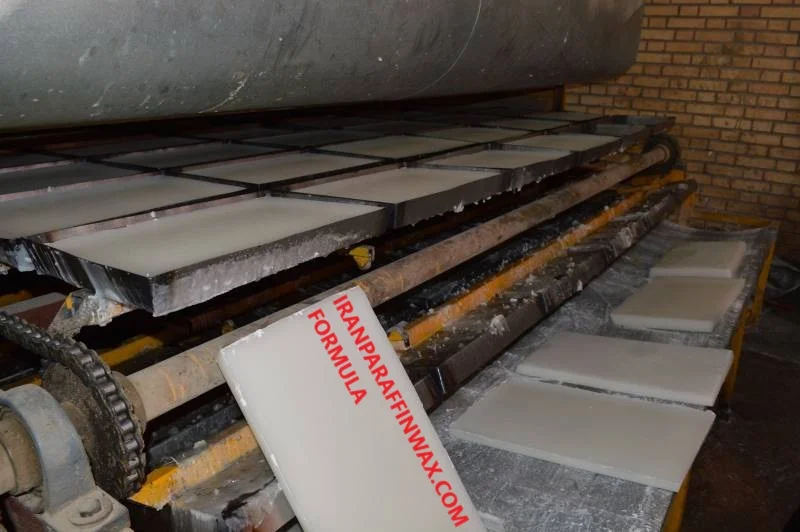
Paraffin Structure and Chemical Formula
Paraffin is a term used in chemistry for saturated hydrocarbons, especially alkanes made only of carbon and hydrogen. These compounds contain single covalent bonds and generally follow the alkane formula:
CnH₂n+₂
However, paraffin wax does not have one single chemical formula because commercial paraffin wax is a mixture of several long-chain hydrocarbons.
Paraffin wax commonly contains long-chain hydrocarbons, often around C20 to C40, although the exact composition varies according to the petroleum source and refining process.
Understanding the paraffin structure, chemical formula and molecular composition helps explain its melting behavior, stability, water resistance and industrial applications.
Table of Contents
ToggleWhat Is Paraffin in Chemistry?
In chemistry, paraffins are saturated hydrocarbons known as alkanes. They contain carbon (C) and hydrogen (H), with only single bonds between their atoms.
The general formula for an acyclic saturated alkane is:
CnH₂n+₂
In this formula:
- C represents carbon.
- H represents hydrogen.
- n represents the number of carbon atoms.
For example, methane contains one carbon atom and has the formula CH₄, while hexane contains six carbon atoms and has the formula C₆H₁₄.
As the hydrocarbon chain becomes longer, its physical properties change. Lower alkanes are generally gases, intermediate members are liquids, and sufficiently long chains can form waxy solids.
Paraffin Chemical Formula
There is an important distinction between the general paraffin formula and the formula of paraffin wax.
For individual straight-chain or branched acyclic alkanes, the general molecular formula is:
CnH₂n+₂
Examples include:
| Paraffin Hydrocarbon | Molecular Formula | Carbon Atoms | Typical State at Room Temperature |
|---|---|---|---|
| Methane | CH₄ | 1 | Gas |
| Ethane | C₂H₆ | 2 | Gas |
| Propane | C₃H₈ | 3 | Gas |
| Butane | C₄H₁₀ | 4 | Gas |
| Hexane | C₆H₁₄ | 6 | Liquid |
| Decane | C₁₀H₂₂ | 10 | Liquid |
| Eicosane | C₂₀H₄₂ | 20 | Solid |
| Docosane | C₂₂H₄₆ | 22 | Solid |
Therefore, there is no contradiction between different formulas used for paraffin. CnH₂n+₂ is the general formula, while formulas such as C₂₀H₄₂ or C₂₂H₄₆ describe specific paraffin hydrocarbons.
Paraffin Structure
The paraffin structure consists of carbon atoms connected mainly by carbon-carbon single bonds, with hydrogen atoms completing the remaining bonds.
A simple straight-chain paraffin can be represented as:
CH₃–(CH₂)n–CH₃
This structure is characteristic of normal paraffins, also called n-paraffins.
Because carbon forms four covalent bonds, each carbon atom bonds to neighboring carbon and hydrogen atoms to produce a stable saturated structure.
Paraffins may also have branched structures. Therefore, two hydrocarbons can contain the same numbers of carbon and hydrogen atoms while having different structural arrangements.
Paraffin Molecular Formula
The term paraffin molecular formula can have two meanings.
For a specific alkane, it refers to an exact formula such as:
C₂₀H₄₂
For commercial paraffin wax, however, there is normally no single molecular formula because the material contains a distribution of hydrocarbon molecules.
Paraffin wax consists mainly of higher-molecular-weight saturated hydrocarbons. The existing product can therefore contain molecules such as:
C₂₀H₄₂, C₂₅H₅₂, C₃₀H₆₂, C₃₂H₆₆ and other long-chain hydrocarbons.
This molecular distribution influences important properties such as melting range, hardness and viscosity.
Paraffin Wax Chemical Structure
Paraffin wax is predominantly composed of long-chain saturated hydrocarbons.
A simplified representation is:
CH₃–CH₂–CH₂–CH₂–…–CH₃
Unlike a pure chemical compound, commercial paraffin wax contains multiple hydrocarbon chain lengths. This is why it is more accurate to describe its composition and carbon-number distribution rather than assign one exact formula to the entire wax.
Is Paraffin Ionic or Covalent?
Paraffin is covalent, not ionic.
Its molecules contain:
- Carbon-carbon (C–C) covalent bonds
- Carbon-hydrogen (C–H) covalent bonds
There are no positively and negatively charged ions forming an ionic lattice.
This covalent structure contributes to paraffin’s chemical stability.
Is Paraffin Polar or Nonpolar?
Paraffin is considered nonpolar.
The C–C bonds are nonpolar, while the C–H bonds have only a small polarity. Across a hydrocarbon molecule, this results in predominantly nonpolar behavior.
Consequently, paraffin:
- Does not dissolve in water
- Repels water
- Dissolves more readily in suitable nonpolar organic solvents.
Paraffin Structure and Physical Properties
The molecular structure of paraffin directly affects its physical properties.
As hydrocarbon chains become longer, intermolecular attractions generally increase. This can increase boiling point and, for sufficiently long chains, produce solid materials at room temperature.
In paraffin wax, the distribution and arrangement of hydrocarbon chains influence:
Melting range: Longer and more linear chains generally support higher melting behavior.
Hardness: Molecular composition and crystal structure influence whether a wax is relatively hard or soft.
Viscosity: Molecular size and composition affect the viscosity of molten wax.
Water resistance: The nonpolar hydrocarbon structure gives paraffin strong hydrophobic characteristics.
These properties explain why selecting the correct paraffin grade matters for different industrial applications.
Paraffin Wax Composition
Commercial paraffin wax is refined from petroleum-derived wax fractions and consists primarily of saturated hydrocarbons.
Its exact composition varies according to feedstock and refining level.
For this reason, industrial paraffin wax is commonly specified using properties such as:
- Oil content
- Melting or congealing point
- Color
- Penetration
- Viscosity
- Purity
Rather than relying on a single molecular formula, buyers should evaluate these specifications when selecting a paraffin wax grade.
Paraffin vs Olefin Structure
Paraffins and olefins are both hydrocarbons, but their structures differ.
| Property | Paraffins | Olefins |
|---|---|---|
| Hydrocarbon type | Saturated | Unsaturated |
| Main carbon bonds | C–C single bonds | Contains C=C double bond |
| General formula* | CnH₂n+₂ | CnH₂n |
| Common chemistry name | Alkanes | Alkenes |
| Relative reactivity | Lower | Higher |
*The formulas shown apply to typical acyclic members of these hydrocarbon families.
The absence of carbon-carbon double bonds is one reason paraffins are described as saturated hydrocarbons.
Paraffin Structure and Uses
The chemical structure of paraffin makes it useful in many industrial and consumer applications.
Paraffin wax is commonly used in:
- Candle manufacturing
- Packaging and coatings
- Rubber processing
- Polishes
- Lubrication systems
- Electrical applications
- Cosmetic formulations
- Various industrial wax blends
Different applications require different melting ranges, oil contents, hardness levels and refining levels.
Therefore, understanding the chemical structure of paraffin is useful not only in chemistry but also when selecting a suitable commercial wax grade.
Frequently Asked Questions
What is the chemical formula of paraffin?
For acyclic saturated paraffin hydrocarbons or alkanes, the general formula is CnH₂n+₂. However, commercial paraffin wax is a mixture of hydrocarbons and therefore does not have one exact molecular formula.
What is the structure of paraffin?
Paraffin consists of saturated hydrocarbon chains containing carbon-carbon and carbon-hydrogen single covalent bonds. A simplified normal-paraffin structure is CH₃–(CH₂)n–CH₃.
What is the molecular formula of paraffin wax?
Paraffin wax has no single molecular formula because it contains a mixture of long-chain hydrocarbons. Individual components can include compounds such as C₂₀H₄₂, C₂₅H₅₂ and C₃₀H₆₂.
Is paraffin an alkane?
Yes. In chemistry, the term paraffin is commonly associated with saturated hydrocarbons known as alkanes.
Is paraffin ionic or covalent?
Paraffin is covalent. Its molecules contain C–C and C–H covalent bonds rather than ionic bonds.
Is paraffin polar or nonpolar?
Paraffin is predominantly nonpolar, which explains why it does not dissolve in water.
What is paraffin made of?
Paraffin wax is mainly a mixture of saturated long-chain hydrocarbons. Commercial composition varies depending on petroleum feedstock and refining refined paraffin conditions.
Why does paraffin wax not have one chemical formula?
Because paraffin wax is not normally one pure molecule. It contains a mixture of hydrocarbons with different chain lengths, so its composition is better described as a hydrocarbon range rather than a single molecular formula.
