

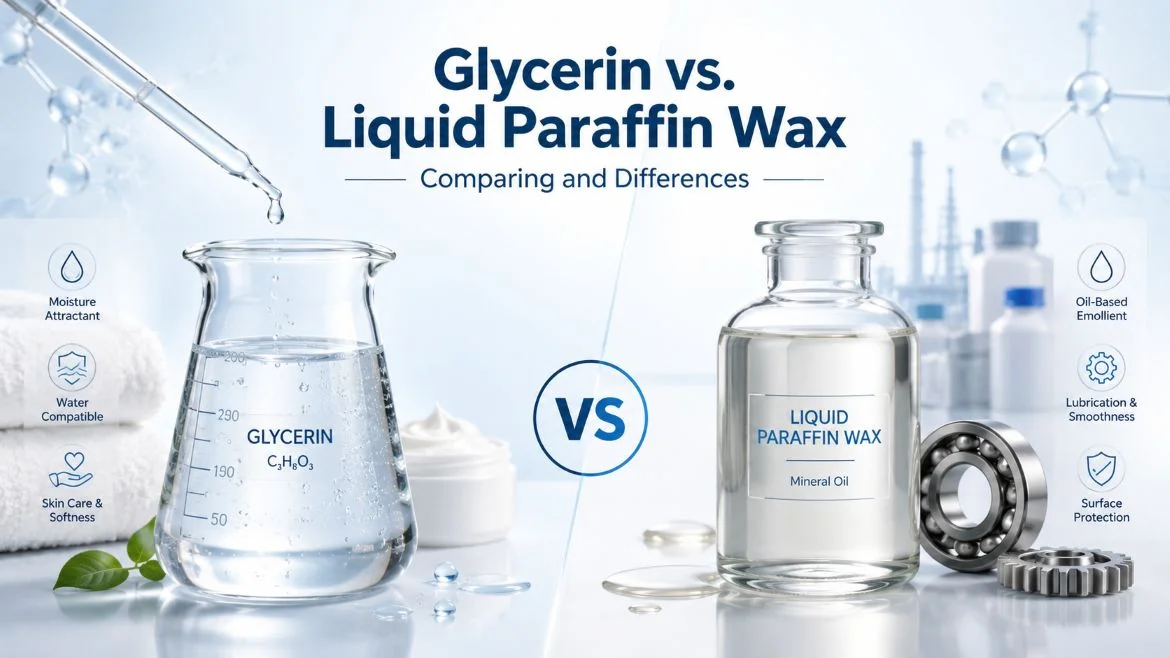
Glycerin vs. Liquid Paraffin Wax, Comparing and Differences for Global Buyers
Glycerin vs. liquid paraffin wax, comparing and differences help buyers choose the right raw material for cosmetics, personal care, soap, pharma, chemicals, lubricants, polishing products, rubber, plastics, and many other industries. Although both products may look clear in many grades, they work in very different ways. Therefore, importers, companies, manufacturers, traders, self-employed people, businessmen, and businesswomen should compare their function before buying. Glycerin attracts water and supports moisture. However, liquid paraffin wax gives an oily feel and creates a smooth protective layer. Because of this clear difference, each product fits different formulas. For example, many cosmetic and soap manufacturers use glycerin when they need hydration and softness. Meanwhile, many oil, polish, lubricant, and personal care manufacturers use liquid paraffin wax when they need smoothness, shine, and water resistance. Iranparaffinwax helps international buyers source wax, oil, petroleum-based products, and related materials for different markets. Therefore, if you want to compare glycerin vs. liquid paraffin wax before placing an order, you can contact us through our website, inquiry form, email, or WhatsApp. Also, our team can guide you about grade, packing, commercial terms, destination, and shipment possibilities.
Glycerin in Moisture-Based Applications
Glycerin works as a clear, thick, and moisture-friendly liquid. It mixes well with water. Also, it attracts moisture and helps formulas stay soft and stable. Because of this feature, many industries use glycerin in water-based and moisture-based products. For example, soap producers use glycerin to improve smoothness and skin feel. Cosmetic factories use it in creams, lotions, shampoos, shower gels, and hand care products. In addition, oral care producers may use glycerin in toothpaste and mouth care formulas because it supports texture and moisture. Moreover, some chemical and industrial producers use glycerin in special blends where water compatibility matters. Therefore, buyers who need a soft, water-friendly, and moisture-supporting raw material often choose glycerin. However, glycerin does not act like mineral oil. It does not create the same oily film that liquid paraffin wax creates. Therefore, buyers should not compare these two products only by appearance. Instead, they should compare them by function, formula type, and final use.
Liquid Paraffin Wax in Smooth Oil-Based Applications
Liquid paraffin wax, also known in many markets as liquid paraffin or white oil, works as a clear and smooth oily material. It comes from refined petroleum fractions, and good-quality grades usually have a clean appearance, low odor, and stable texture. Unlike glycerin, liquid paraffin wax does not mix with water. Instead, it works well in oil-based systems. Therefore, many manufacturers use it when they need lubrication, smooth touch, shine, surface protection, and water resistance. For example, personal care producers use liquid paraffin wax in baby oil, body oil, hair oil, massage oil, creams, and lotions. Also, industrial manufacturers use it in lubricants, rubber processing, plastics, textile oil, polish, and coating-related products. Because liquid paraffin wax gives a slippery and oily feel, it supports products that need easy spreading. Therefore, it fits applications where glycerin cannot give the same result.
Main Functional Difference Between Glycerin and Liquid Paraffin Wax
The main difference between glycerin and liquid paraffin wax comes from their behavior with water. Glycerin loves water and mixes with it. However, liquid paraffin wax repels water and works as an oily layer. This difference changes everything in production. If a factory needs moisture, softness, and water compatibility, glycerin can work better. However, if a factory needs lubrication, gloss, oil feel, or surface protection, liquid paraffin wax can work better. Also, glycerin often feels sticky in high amounts because it attracts moisture. Meanwhile, liquid paraffin wax feels smooth, oily, and slippery. Therefore, each product gives a different touch in the final product. For this reason, manufacturers should check the formulation goal before ordering. In addition, traders and importers should ask their customers about application, grade, viscosity, purity, and packing before confirming the deal.
Glycerin vs. Liquid Paraffin Wax in Cosmetic Products
Glycerin vs. liquid paraffin wax, comparing and differences matter a lot in cosmetic production. Both products can appear in personal care formulas, but they do different jobs. Glycerin helps the skin keep moisture. Therefore, cosmetic manufacturers use it in moisturizing creams, hand creams, lotions, soaps, shampoos, shower gels, and toothpaste. It supports softness and helps the formula feel more comfortable. However, liquid paraffin wax supports smoothness and surface protection. It creates a thin oily layer and helps reduce water loss from the skin surface. Therefore, producers use it in baby oil, body oil, massage oil, hair oil, creams, and protective lotions. So, glycerin works better when the formula needs hydration. On the other hand, liquid paraffin wax works better when the formula needs oily smoothness and protection. Moreover, some cosmetic formulas may use both products together, because each one supports a different function.
Table of Contents
ToggleComparing and Differences in Soap and Detergent Products
Soap makers often look at glycerin because it improves the feel of soap on the skin. Also, it helps the soap feel less dry. Therefore, glycerin has a strong role in transparent soap, handmade soap, liquid soap, and some personal wash products. However, liquid paraffin wax does not play the same role in soap. It does not mix with water in the same way. Therefore, soap producers usually use it only in special formulas where they need extra softness, oil feel, or surface conditioning. Because of this difference, buyers in the soap industry should not replace glycerin with liquid paraffin wax directly. Instead, they should test the formula and check the final product quality. Otherwise, the product may lose transparency, foam balance, texture, or skin feel.
Comparing and Differences in Pharmaceutical and Personal Care Use
Pharmaceutical and personal care manufacturers also compare glycerin and liquid paraffin wax before buying. Glycerin can support moisture, texture, and softness in some topical and oral care products. In addition, it can help formulas stay stable and smooth. Liquid paraffin wax can work as a mineral oil-based ingredient in some personal care and pharmaceutical-related applications. For example, it may work as a lubricant, base oil, or skin-protective material depending on the grade and destination market. However, pharma and personal care buyers must choose the correct grade. Therefore, they should request specification, COA, packing details, and regulatory documents before shipment. Also, they should check local rules in their market before using any raw material in regulated products. Iranparaffinwax can support buyers with commercial information, available grades, and export-related guidance. Therefore, if you need glycerin, liquid paraffin wax, or related products, you can contact us by website, inquiry form, email, or WhatsApp.
Comparing and Differences in Industrial Applications
Industrial buyers often choose raw materials based on cost, performance, and availability. Therefore, glycerin and liquid paraffin wax both have strong demand in different sectors. Glycerin can support water-based chemical blends, textile applications, cleaning products, resin-related uses, and other industrial formulas. Since it mixes with water, it works better in systems that need water compatibility. Meanwhile, liquid paraffin wax supports lubrication, polishing, rubber processing, plastic processing, cable oil, textile oil, and release-agent applications. Since it does not mix with water, it works better in oil-based systems. Therefore, the best choice depends on the production line. If your factory needs moisture and water blending, glycerin may fit your need. However, if your factory needs oil film, shine, and smoothness, liquid paraffin wax may fit your need better.
Comparing Texture, Feel, and Appearance Glycerin vs. Liquid Paraffin Wax
Glycerin and liquid paraffin wax can both look clear in good-quality grades. However, they feel very different. Glycerin feels thick and slightly sticky. Also, it pulls moisture from the surrounding air. Because of this behavior, it gives a hydrated and soft feel in many formulas. Liquid paraffin wax feels oily, smooth, and slippery. It spreads easily on surfaces. Also, it leaves a protective film after application. Therefore, appearance alone cannot help buyers make the right choice. Instead, buyers should compare texture, solubility, function, and final product target. This simple step can prevent wrong orders and reduce production problems.
Comparing Water Compatibility and Oil Compatibility
Water compatibility creates one of the biggest differences between these two products. Glycerin mixes with water and many water-based ingredients. Therefore, it works well in water-based creams, gels, soaps, shampoos, and cleaning products. Liquid paraffin wax does not mix with water. Instead, it fits oil-based materials, wax blends, mineral oil formulas, polishes, and lubricants. Therefore, it works well when the producer needs an oily phase. Because of this difference, manufacturers should test compatibility before using any new raw material. Also, traders should ask customers about the formula system before offering the product. This approach helps both sides avoid technical mistakes.
Comparing Moisture Support and Surface Protection
Glycerin supports moisture. It attracts water and helps formulas keep a soft feel. Therefore, it works well when the product should improve hydration. Liquid paraffin wax supports surface protection. It forms an oily barrier and helps create a smooth layer. Therefore, it works well when the product should protect, polish, lubricate, or add shine. So, glycerin gives moisture support, while liquid paraffin wax gives surface protection. This difference helps importers, manufacturers, and traders choose the right product for the correct application.
Comparing Viscosity and Grade Selection
Viscosity matters in both products. Glycerin usually has a thick liquid texture. However, liquid paraffin wax can come in different viscosity ranges, such as light liquid paraffin and heavy liquid paraffin. Light liquid paraffin usually flows more easily and fits applications that need a lighter feel. Meanwhile, heavy liquid paraffin gives a thicker oily touch and fits applications that need more body and lubrication. Therefore, buyers should not only ask for “liquid paraffin wax.” Instead, they should ask for the viscosity range, color, odor, density, flash point, and final application. Also, they should request COA or TDS before confirming the order. In the same way, glycerin buyers should check purity, grade, water content, color, odor, and packing. This helps them choose the correct material for cosmetics, industrial use, or other applications.
Comparing Glycerin vs. Liquid Paraffin Wax Packing Options for Export Buyers
Packing plays an important role in international trade. Glycerin often comes in drums, IBC tanks, flexitanks, or bulk options depending on quantity and supplier ability. Liquid paraffin wax can also come in drums, IBC tanks, flexitanks, or bulk supply. However, the best packing depends on destination, quantity, application, and handling facilities. For example, a small buyer may prefer drums because they are easier to store and resell. Meanwhile, a large manufacturer may prefer IBC tanks or bulk supply because they reduce handling cost. Therefore, importers and traders should share their destination port, required quantity, and preferred packing when they send an inquiry. Iranparaffinwax can review the request and guide buyers based on available options.
Comparing Price Factors and Market Demand Glycerin vs. Liquid Paraffin Wax
The price of glycerin and liquid paraffin wax can change because of grade, purity, origin, packing, freight cost, crude oil market, biodiesel market, exchange rate, and destination. Therefore, buyers should request the latest price before placing an order. Glycerin demand often comes from cosmetics, soap, pharma, food-related industries, and chemical producers. Meanwhile, liquid paraffin wax demand comes from cosmetics, pharma, rubber, plastics, textile, polish, and lubricant industries. Because both products serve large markets, stable sourcing matters. Therefore, Iranparaffinwax invites importers, companies, manufacturers, traders, self-employed people, businessmen, and businesswomen to contact us through our website, inquiry form, email, or WhatsApp for updated commercial information.
Which Glycerin vs. Liquid Paraffin Wax Should Buyers Choose?
Buyers should choose glycerin when they need moisture, water compatibility, softness, and humectant action. Therefore, glycerin can fit soap production, cosmetic creams, lotions, toothpaste, personal wash products, and some water-based chemical formulas. However, buyers should choose liquid paraffin wax when they need lubrication, oil feel, shine, surface protection, and water resistance. Therefore, liquid paraffin wax can fit baby oil, body oil, hair oil, massage oil, polish, rubber, plastics, textile oils, and lubricant products. Also, buyers should check the target market before buying. Cosmetic, pharma, and personal care products may need higher-grade materials and stronger documentation. Industrial products may need different technical specifications. Therefore, one product name does not tell the full story.
Can Manufacturers Use Both Products Together?
Some manufacturers can use both glycerin and liquid paraffin wax in one formula. For example, a cream may use glycerin for moisture and liquid paraffin wax for smoothness and surface protection. In this case, both products support the final formula. However, they still do not do the same job. Glycerin works in the water phase, while liquid paraffin wax works in the oil phase. Therefore, formulators should balance both materials carefully. Moreover, manufacturers should run small tests before changing a formula. This step helps them check texture, stability, feel, color, odor, and final performance. As a result, they can reduce production risk and protect product quality.
Why Importers and Traders Work with Iranparaffinwax
Iranparaffinwax supports global buyers who need wax, oil, and petroleum-based products for different industries. Also, we understand that importers and traders need clear communication, fast response, practical information, and reliable commercial guidance. Therefore, when you contact us, you can share your product name, grade, quantity, destination port, packing request, and application. Then, our team can review your inquiry and guide you based on available supply and export options. In addition, Iranparaffinwax welcomes importers, companies, manufacturers, traders, distributors, self-employed buyers, businessmen, and businesswomen from different countries. Whether you need one container, regular monthly supply, or a special grade inquiry, you can contact us through the website, form, email, or WhatsApp.
Contact Iranparaffinwax for Glycerin and Liquid Paraffin Wax
If you want to buy or compare glycerin and liquid paraffin wax, contact Iranparaffinwax today. Also, if you do not know which product fits your application, send us your product use and target market. For example, tell us whether you need the product for cosmetics, soap, pharma, lubricant, polish, rubber, plastic, textile, coating, or another industry. Then, our team can help you compare available options and choose the right product. Glycerin vs. liquid paraffin wax, comparing and differences can look simple at first. However, the right choice can improve your final product, reduce waste, and support better business results. Therefore, send your inquiry through our website, inquiry form, email, or WhatsApp and start your sourcing process with Iranparaffinwax.
| Buyer Need | Better Choice |
|---|---|
| Moisture and hydration | Glycerin |
| Water-based formula | Glycerin |
| Soap softness | Glycerin |
| Oily smoothness | Liquid Paraffin Wax |
| Surface protection | Liquid Paraffin Wax |
| Lubrication | Liquid Paraffin Wax |
| Baby oil or body oil | Liquid Paraffin Wax |
| Cream formula with both water and oil phase | Both products may work together |
Final Buying Guide for Glycerin vs. Liquid Paraffin Wax
Glycerin attracts moisture and works well in water-based formulas. Therefore, it fits soaps, creams, lotions, toothpaste, shampoos, and moisture-focused products. However, liquid paraffin wax creates a smooth oily layer and works well in oil-based formulas. Therefore, it fits baby oil, body oil, hair oil, massage oil, polish, rubber, plastics, textile oil, and lubricants. So, when buyers compare glycerin vs. liquid paraffin wax, comparing and differences should focus on application, grade, viscosity, purity, packing, and final product needs. Contact Iranparaffinwax through the website, inquiry form, email, or WhatsApp for more details, updated offers, and export support.