

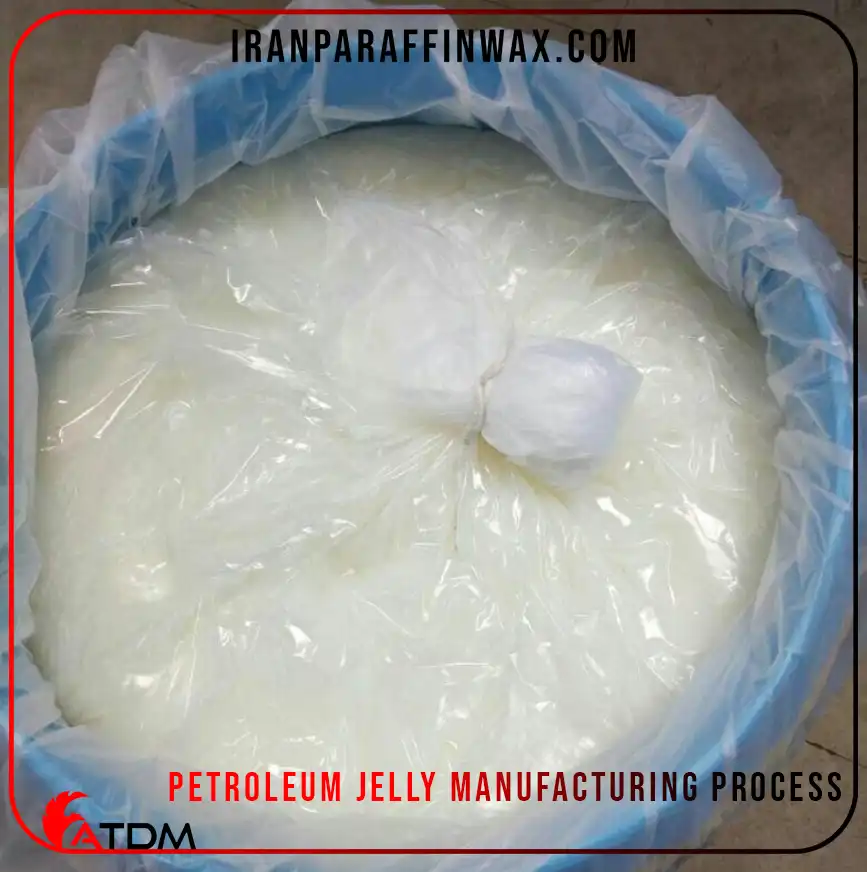
The petroleum jelly manufacturing process plays a vital role in producing one of the world’s most versatile semi-solid petroleum products. Today, petroleum jelly is widely used across the pharmaceutical, cosmetic, personal care, food packaging, industrial, and veterinary industries because of its excellent moisturizing, protective, and lubricating properties.
To ensure consistent quality, modern manufacturers follow strict refining and quality control procedures that enable petroleum jelly to meet international standards for purity, consistency, and safety. Moreover, every production stage, from raw material selection to final packaging, contributes to creating a premium-quality product suitable for demanding industrial applications. As a result, manufacturers can deliver petroleum jelly that performs reliably across a wide range of uses.
In this guide, we explain the complete petroleum jelly manufacturing process, discuss key quality standards, explore its industrial applications, and highlight why choosing a reliable supplier like ATDM is essential for ensuring consistent product quality and a dependable supply.
Raw Materials Used in Petroleum Jelly Manufacturing
The manufacturing process begins with carefully selected petroleum derived feedstocks.
Table of Contents
ToggleThe primary raw materials include:
-
Slack wax
-
Heavy lubricating oil fractions
-
Paraffin wax
-
Refined mineral oils
-
Hydrocarbon blends
Manufacturers choose these materials based on viscosity, melting point, color, odor, and final product specifications.
High quality feedstock directly influences the consistency and purity of the finished petroleum jelly.
Petroleum Jelly Manufacturing Process Step by Step
1. Selection of Feedstock
The first stage involves selecting suitable petroleum fractions from the refining process.
Engineers evaluate the raw materials for:
-
Hydrocarbon composition
-
Wax content
-
Oil content
-
Melting characteristics
-
Color
-
Stability
Using premium feedstock ensures better refining efficiency and higher product quality.
2. Initial Refining
Next, the selected petroleum fractions undergo preliminary refining.
During this stage, manufacturers remove:
-
Heavy impurities
-
Unwanted hydrocarbons
-
Sulfur compounds
-
Nitrogen compounds
-
Metallic contaminants
This step prepares the material for advanced purification.
3. Dewaxing Process
The dewaxing stage controls the texture and consistency of petroleum jelly.
Manufacturers carefully separate excess wax from lubricating oil fractions using specialized filtration or solvent extraction techniques.
As a result, the product achieves:
-
Better spreadability
-
Improved smoothness
-
Consistent texture
-
Enhanced stability
This step greatly improves the overall performance of the final product.
4. Vacuum Distillation
Vacuum distillation further purifies the petroleum fractions.
Because the process operates under reduced pressure, manufacturers separate different hydrocarbon components without exposing them to excessive temperatures.
Consequently, the product retains its desired physical characteristics while minimizing thermal degradation.
5. Hydrogenation
Hydrogenation is one of the most important purification steps.
During hydrogen treatment, hydrogen reacts with unsaturated hydrocarbons in the presence of catalysts.
This process helps:
-
Improve product stability
-
Remove odor
-
Enhance color
-
Increase oxidation resistance
-
Improve shelf life
Moreover, hydrogenation significantly raises product purity.
6. Clay Treatment or Adsorption Purification
Many manufacturers use activated clay or other adsorbent materials to remove remaining impurities.
This treatment effectively eliminates:
-
Color bodies
-
Trace contaminants
-
Organic residues
-
Odorous compounds
As a result, vaseline develops a cleaner appearance and a more neutral odor.
7. Bleaching
Bleaching further enhances the product’s visual quality.
Manufacturers carefully control this process to produce bright white petroleum jelly for pharmaceutical and cosmetic applications.
Industrial grades may require less intensive bleaching depending on customer specifications.
8. Filtration
Fine filtration removes microscopic particles that may remain after purification.
Modern filtration systems ensure:
-
High clarity
-
Smooth consistency
-
Improved cleanliness
-
Better product stability
This stage also protects downstream equipment during packaging.
9. Blending
Once purification is complete, manufacturers blend different refined components to achieve the required specifications.
Blending allows producers to control:
-
Viscosity
-
Melting point
-
Texture
-
Oil content
-
Spreadability
-
Consistency
Careful formulation ensures every production batch delivers identical performance.
10. Quality Control Testing
Before packaging, each batch undergoes extensive laboratory testing.
Typical quality tests include:
-
Color analysis
-
Penetration testing
-
Drop melting point
-
Oil content
-
Viscosity
-
Odor evaluation
-
Microbiological testing (for pharmaceutical grades)
-
Hydrocarbon composition analysis
Quality assurance teams verify compliance with applicable international standards before approving the product for shipment.
11. Packaging
Finally, petroleum jelly is packaged in suitable containers based on customer requirements.
Packaging options include:
-
Drums
-
Pails
-
Buckets
-
Plastic containers
-
Industrial bulk packaging
-
Retail jars
Proper packaging protects the product from contamination during storage and transportation.
Petroleum Jelly Manufacturing Flow Chart
The complete production process follows this sequence:
Raw Material Selection → Initial Refining → Dewaxing → Vacuum Distillation → Hydrogenation → Clay Treatment → Bleaching → Filtration → Blending → Quality Control → Packaging → Distribution
This systematic approach ensures consistent product quality across every batch.
Types of Petroleum Jelly
Manufacturers produce several petroleum jelly grades to meet different industry requirements.
White Petroleum Jelly
White petroleum jelly undergoes extensive refining to achieve exceptional purity.
Industries commonly use it in:
-
Cosmetics
-
Pharmaceuticals
-
Skin care
-
Baby care products
Yellow Petroleum Jelly
Yellow petroleum jelly contains slightly less refining while maintaining excellent performance.
It is commonly used in:
-
Industrial lubrication
-
Rust prevention
-
Leather treatment
-
Cable filling
Pharmaceutical Petroleum Jelly
This grade complies with strict pharmacopeia requirements and serves medical applications where purity is essential.
Cosmetic Petroleum Jelly
Cosmetic manufacturers use highly refined petroleum jelly in creams, lotions, lip balms, moisturizers, and beauty products.
Applications of Petroleum Jelly
The versatility of petroleum jelly makes it valuable across many industries.
Pharmaceutical Industry
Pharmaceutical companies use petroleum jelly in:
-
Ointments
-
Medicinal creams
-
Healing balms
-
Topical formulations
-
Protective skin barriers
Cosmetic Industry
Beauty brands rely on petroleum jelly for:
-
Moisturizers
-
Lip care
-
Skin creams
-
Hair products
-
Makeup removers
Personal Care Products
Manufacturers incorporate petroleum jelly into:
-
Baby products
-
Hand creams
-
Body lotions
-
Foot care products
Industrial Applications
Industrial users benefit from petroleum jelly in:
-
Anti corrosion coatings
-
Cable compounds
-
Metal protection
-
Lubrication
-
Rubber processing
Veterinary Products
Veterinary manufacturers use petroleum jelly in protective ointments and animal care products.
Quality Standards for Petroleum Jelly
Reliable manufacturers follow internationally recognized quality standards.
These standards often evaluate:
-
Purity
-
Color
-
Melting point
-
Penetration
-
Oil content
-
Odor
-
Stability
-
Safety
Strict quality management ensures petroleum jelly performs consistently in every application.
Factors That Affect Petroleum Jelly Quality
Several factors influence final product quality.
These include:
-
Raw material quality
-
Refining technology
-
Hydrogenation efficiency
-
Filtration performance
-
Blending accuracy
-
Process control
-
Packaging quality
-
Storage conditions
Manufacturers that monitor each stage carefully produce superior petroleum jelly with excellent consistency.
Advantages of High Quality Petroleum Jelly
Premium petroleum jelly offers many benefits.
These include:
-
Excellent moisture barrier
-
Long shelf life
-
High chemical stability
-
Smooth texture
-
Superior lubrication
-
Excellent spreadability
-
Low reactivity
-
Wide industrial compatibility
These advantages explain why petroleum jelly remains an essential ingredient across numerous industries.
Choosing a Reliable Petroleum Jelly Supplier
Selecting the right supplier is just as important as understanding the manufacturing process.
A trusted supplier should provide:
-
Consistent product quality
-
International quality standards
-
Reliable supply chain
-
Technical support
-
Multiple packaging options
-
Competitive pricing
-
Fast delivery
-
Product documentation
ATDM is a trusted supplier of petroleum jelly, serving customers across cosmetic, pharmaceutical, personal care, and industrial markets. The company provides high quality petroleum jelly products manufactured under strict quality control procedures to ensure consistent performance and dependable supply.
Future Trends in Petroleum Jelly Manufacturing
The petroleum jelly industry continues to improve manufacturing efficiency through advanced refining technologies and sustainable production practices.
Modern facilities increasingly focus on:
-
Energy efficient processing
-
Enhanced purification methods
-
Automated quality inspection
-
Improved product consistency
-
Environmentally responsible manufacturing
-
Better production traceability
These innovations help manufacturers meet growing global demand while maintaining high product quality.
Frequently Asked Questions
What is petroleum jelly made from?
Petroleum jelly is produced from highly refined petroleum derived hydrocarbons, including waxes and mineral oils that undergo multiple purification steps.
What is the difference between white and yellow petroleum jelly?
White petroleum jelly receives additional purification and bleaching, making it suitable for pharmaceutical and cosmetic uses. Yellow petroleum jelly is commonly used for industrial applications.
Why is hydrogenation important in the petroleum jelly manufacturing process?
Hydrogenation improves color, stability, odor, and oxidation resistance while increasing overall product purity.
Why should companies choose a reliable petroleum jelly supplier?
A reliable supplier ensures consistent product quality, dependable delivery, technical support, and compliance with international quality standards, helping manufacturers maintain high quality finished products.
Conclusion
The petroleum jelly manufacturing process combines advanced refining, purification, blending, and quality assurance techniques to produce a versatile material that serves countless industries worldwide. From raw material selection to final packaging, every production stage contributes to the purity, consistency, and performance of the finished product. As a result, strict process control remains essential for ensuring consistent quality and meeting industry standards.
Furthermore, as demand continues to grow across the pharmaceutical, cosmetic, and industrial sectors, manufacturers increasingly rely on trusted suppliers that can deliver reliable quality and uninterrupted supply. In this regard, ATDM stands out as a dependable supplier of petroleum jelly, providing high-quality products that meet the needs of customers across diverse applications. Moreover, by partnering with an experienced supplier and understanding the complete manufacturing process, businesses can ensure consistent performance, regulatory compliance, and long-term product reliability. Ultimately, this approach helps companies maintain product excellence while meeting the evolving demands of global markets.
