

Iran HDPE Supplier | High Density Polyethylene Exporter
Home » Polyethylene Supplier | HDPE, LDPE, LLDPE & LMP » Iran HDPE Supplier | High Density Polyethylene Exporter
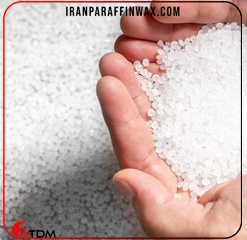
Iran HDPE Supplier | High Density Polyethylene (HDPE)
IranParaffinWax.com is an Iran HDPE supplier serving international plastic manufacturers, distributors, traders, and industrial buyers. High Density Polyethylene, commonly known as HDPE, is a strong thermoplastic polymer widely used in pipes, bottles, containers, films, injection molding, blow molding, and other industrial plastic products.
Different manufacturing processes require different HDPE grades. Therefore, buyers should select the material according to Melt Flow Index, density, mechanical properties, processing method, and final application. In addition, we can provide Technical Data Sheets, Certificates of Analysis, packing information, current prices, and export terms for available grades.
High Density Polyethylene (HDPE)
HDPE stands for High Density Polyethylene and belongs to the polyethylene family. Its molecular structure has relatively low branching, which allows the polymer chains to pack closely together.
As a result, HDPE generally provides higher density, rigidity, strength, and chemical resistance than Low Density Polyethylene. Moreover, its durability makes it suitable for demanding industrial and consumer applications.
Because of these properties, manufacturers commonly choose HDPE when the finished product requires greater stiffness, dimensional stability, and mechanical performance.
Table of Contents
ToggleIran HDPE Supplier for Industrial Buyers
As an Iran HDPE supplier, IranParaffinWax.com supplies HDPE grades according to buyer specifications and manufacturing requirements.
Different applications require different processing characteristics. Consequently, buyers should consider Melt Flow Index, density, mechanical strength, impact resistance, and processing method before selecting a grade.
Depending on current availability, our HDPE supply range may include film grades, blow molding grades, injection molding grades, extrusion grades, pipe grades, and other commercial grades requested by specification.
For accurate grade matching, buyers can send their current grade number, TDS, required MFI, density, or final application. Therefore, our sales team can compare the specification with currently available materials.
HDPE Applications
HDPE has a wide range of industrial applications because it combines strength, rigidity, chemical resistance, and relatively low weight.
For example, manufacturers use HDPE for:
Pipes and fittings
Plastic bottles
Chemical containers
Industrial drums
Household containers
Injection molded parts
Blow molded products
Plastic crates
Caps and closures
Films and bags
Sheets and profiles
Water and chemical storage products
However, not every HDPE grade works for every application. Therefore, buyers should always confirm the technical properties of the offered grade before production.
HDPE for Pipes and Fittings
Pipe production is one of the important applications of High Density Polyethylene. HDPE provides good durability, chemical resistance, and toughness, which makes suitable grades useful for various piping systems.
However, pipe grades require specific technical properties and standards. Consequently, buyers should provide the exact pipe-grade requirement, pressure class, or existing TDS when requesting a quotation.
In addition, pipe applications may require properties that differ significantly from general injection or blow molding grades.
HDPE for Blow Molding
Manufacturers widely use HDPE in blow molding to produce bottles, containers, drums, and similar hollow plastic products.
Suitable blow molding grades provide a combination of melt strength, rigidity, impact resistance, and processing stability. Therefore, the correct grade depends on container size, wall thickness, production equipment, and final application.
For instance, a small bottle may require a different HDPE specification from a large industrial container.
HDPE for Injection Molding
Injection molding grades of HDPE are used in a broad range of rigid plastic products.
Common applications include crates, caps, closures, household products, industrial components, and molded containers.
Moreover, Melt Flow Index plays an important role in injection molding. Higher or lower flow characteristics may suit different part designs and processing conditions.
For this reason, buyers should provide the existing grade or required MFI when searching for an alternative material.
HDPE Film Grades
Selected HDPE grades are also used in film production.
Manufacturers may use HDPE film grades for shopping bags, industrial liners, thin films, packaging, and other applications that require higher stiffness compared with many LDPE films.
Nevertheless, film performance depends on the selected grade, processing equipment, thickness, and required strength. Therefore, buyers should review the relevant TDS before placing an order.
Properties of HDPE
High Density Polyethylene generally combines rigidity, strength, durability, and useful chemical resistance.
Typical HDPE characteristics include:
High rigidity
Good tensile strength
Good impact resistance
Good chemical resistance
Low moisture absorption
Good electrical insulation
Good dimensional stability
Useful abrasion resistance
Relatively low weight
However, exact technical values vary between individual HDPE grades. For example, density, Melt Flow Index, tensile strength, elongation, impact strength, and processing temperature depend on the specific product.
Therefore, technical values should always be confirmed through the Technical Data Sheet of the offered grade.
HDPE vs LDPE
HDPE and LDPE both belong to the polyethylene family. However, their molecular structures create major differences in density, rigidity, flexibility, and applications.
HDPE has less molecular branching. Consequently, its polymer chains pack more closely together and create a denser and more rigid material.
LDPE has more branching. As a result, it provides greater softness and flexibility.
Therefore, manufacturers commonly use HDPE for pipes, rigid bottles, containers, and molded products, while LDPE is widely used in films, flexible packaging, bags, and coatings.
HDPE vs LDPE Melting Point
HDPE generally has a higher melting range than LDPE because its more linear molecular structure allows the polymer chains to pack more closely together.
However, the exact melting point depends on grade, molecular structure, additives, and testing method. Therefore, buyers should use the TDS of the specific product when temperature performance is important.
This difference is one of several factors that manufacturers consider when comparing HDPE and LDPE for production.
Why Is HDPE Stronger Than LDPE?
HDPE generally provides greater rigidity and strength because its polymer chains contain less branching.
As a result, the chains can pack more closely together and form a denser structure. In contrast, LDPE contains more branching, which creates greater flexibility but lower rigidity.
However, the final mechanical performance also depends on the grade, processing conditions, product design, and additives.
HDPE vs LLDPE
HDPE and Linear Low Density Polyethylene serve different types of plastic applications.
HDPE generally provides higher rigidity and dimensional stability. In contrast, LLDPE offers greater flexibility and often performs well in stretch film and other flexible-film applications.
Therefore, manufacturers select between HDPE and LLDPE according to the required strength, flexibility, processing behavior, and final product.
HDPE Resin vs HDPE Wax
HDPE resin and HDPE wax are different products and should not be confused.
Standard HDPE resin acts as a primary raw material for manufacturing pipes, containers, bottles, films, molded parts, and other plastic products.
HDPE wax, on the other hand, has a much lower molecular weight. Therefore, manufacturers normally use it as an additive, lubricant, dispersing agent, or processing aid.
How to Select the Right HDPE Grade
Selecting the correct HDPE grade starts with the production process and final application.
Important factors include:
Melt Flow Index (MFI)
Density
Processing method
Injection or blow molding requirements
Pipe or film application
Tensile strength
Impact resistance
Product thickness
Required rigidity
Producer or commercial grade number
If you already use a specific material, send us its grade number or TDS. Then, as an Iran HDPE supplier, we can compare the specification with currently available alternatives.
Moreover, providing the existing specification reduces the risk of selecting a material that behaves differently on your production equipment.
HDPE Packing and Export Supply
HDPE resin is normally supplied in industrial bags suitable for storage and international transportation. However, packing format, palletizing, loading quantity, and container capacity may vary according to producer and grade.
Before preparing a commercial offer, we normally require the required grade, quantity, technical specification, packing preference, destination, and Incoterm.
Once these details are available, we can check current availability and prepare suitable export terms. In addition, transportation options depend on destination, quantity, and shipment method.
Iran HDPE Exporter and Trader
IranParaffinWax.com works as an Iran HDPE supplier and exporter for international buyers requiring polyethylene for pipes, bottles, containers, films, extrusion, blow molding, and injection molding applications.
In addition to material supply, we can provide technical and commercial documents according to the offered grade. These may include a Technical Data Sheet, Certificate of Analysis, packing information, origin details, Commercial Invoice, Packing List, and export documentation.
Moreover, buyers can request suitable delivery terms according to their destination.
Current HDPE prices depend on grade, producer, quantity, packing, market conditions, and transport route.
Request Iran HDPE Price
There is no single HDPE price for every application because different grades have different specifications and market values.
Therefore, buyers should provide the exact grade or technical requirement before requesting a quotation. In addition, order quantity, destination, packing, and Incoterm affect the final commercial offer.
As an Iran HDPE supplier, IranParaffinWax.com can check current availability and offer material according to the required specification.
For faster pricing, please send your required HDPE grade, quantity, destination, Incoterm, and TDS if available.
HDPE FAQ
What does HDPE stand for?
HDPE stands for High Density Polyethylene. It is a rigid thermoplastic polymers widely used in pipes, bottles, containers, molding, extrusion, and other industrial plastic applications.
What is HDPE used for?
Manufacturers use HDPE for pipes, fittings, bottles, containers, drums, crates, caps, molded components, films, sheets, and many other plastic products.
What is the difference between HDPE and LDPE?
HDPE generally has higher density, rigidity, and strength, while LDPE provides greater softness and flexibility. Therefore, HDPE is common in rigid products, whereas LDPE is widely used in flexible films and packaging.
Why is HDPE stronger than LDPE?
HDPE has less molecular branching. Consequently, its polymer chains can pack more closely together and form a denser and more rigid structure.
Does HDPE have a higher melting point than LDPE?
Generally, HDPE has a higher melting range than LDPE. However, exact values depend on the grade and formulation, so buyers should check the relevant Technical Data Sheet.
Is HDPE the same as LLDPE?
No. HDPE generally offers greater rigidity and density, while LLDPE provides more flexibility and is commonly used in flexible-film applications.
Are you an Iran HDPE supplier?
Yes. IranParaffinWax.com supplies Iranian HDPE for international manufacturers, distributors, traders, and industrial buyers. Available grades depend on the required specification and current supply.
Do you export HDPE from Iran?
Yes. We supply HDPE to international markets and can provide packing information, commercial documents, and delivery terms according to the destination.
Are you an HDPE producer in Iran?
IranParaffinWax.com operates as an HDPE supplier and exporter. The actual producer depends on the selected grade and current availability. Producer and origin information can be provided with the commercial offer where applicable.
Can you provide HDPE TDS and COA?
Yes. Technical Data Sheets and Certificates of Analysis can be provided for the offered HDPE grade where available.
How can I request an HDPE quotation?
Send the required grade, quantity, destination, Incoterm, and technical specification. Furthermore, providing your existing grade number or TDS helps us identify a suitable product more accurately.
FAQ 1: What are the main uses of Iran HDPE High-density polyethylene?
Iran HDPE High-density polyethylene is used in many industries because it is strong and versatile. It is perfect for making pipes, plastic bottles, chemical containers, coatings, and packaging. Moreover, it performs well in extreme temperatures and tough environments, which makes it ideal for industrial and commercial applications.
FAQ 2: Why do global buyers choose Iranian HDPE?
Global buyers prefer Iran HDPE High-density polyethylene because it delivers consistent quality, fair prices, and reliable supply. Moreover, Iranian producers use modern production methods and strict quality checks to ensure every batch meets international standards. As a result, importers and manufacturers around the world trust Iranian HDPE for both bulk and custom orders.
FAQ 3: How is Iran HDPE High-density polyethylene packed for export?
Iran HDPE High-density polyethylene is usually shipped in durable PP bags for easy handling and storage. Moreover, bulk buyers can request jumbo bags to save space and reduce shipping costs. Because of these flexible packaging options, importers can plan their logistics smoothly and receive their products in excellent condition.
Specification Sheet
HDPE Technical Data Sheet (TDS) for product specifications, physical properties, processing information, and typical applications.
MSDS (Material Safety Data Sheet)
Download the HDPE Material Safety Data Sheet (MSDS) for handling, storage, safety, transport, and hazard information.