

Consumers continue to compare paraffin wax vs soy wax because candle quality, burn performance, fragrance throw, and production costs matter more than ever. Today, candle brands, private-label manufacturers, and home décor companies want wax solutions that deliver strong results while maintaining product consistency. As a result, the debate around soy wax candles vs paraffin candles […]
Category Archives: polyethylene wax
polyethylene wax (Pe wax )
Polyethylene Wax (PE Wax): Types, Properties, Applications, and Technical Guides
Polyethylene Wax (PE Wax) is one of the most versatile synthetic waxes used in modern manufacturing. Thanks to its excellent lubrication, thermal stability, chemical resistance, and compatibility with numerous formulations, PE wax has become an essential additive in industries such as plastics, PVC processing, masterbatch production, coatings, inks, hot melt adhesives, rubber, and textiles.
Unlike paraffin wax, which is petroleum-based and primarily used for candles, packaging, and cosmetics, polyethylene wax is produced from polyethylene polymers. This gives it superior hardness, higher melting points, and outstanding performance in demanding industrial applications.
Whether you are a manufacturer, exporter, compound producer, or technical buyer, understanding the different grades and applications of polyethylene wax is essential for selecting the right material for your process.
What Is Polyethylene Wax?
Polyethylene wax is a low molecular weight polyethylene polymer manufactured through polymerization or controlled degradation of polyethylene resin.
It appears as white flakes, granules, powder, or pellets and is widely used as a processing aid, lubricant, dispersing agent, and surface modifier.
Compared with natural waxes, PE wax provides:
- Higher hardness
- Better abrasion resistance
- Excellent thermal stability
- Low viscosity
- Superior chemical resistance
- Excellent compatibility with many polymers
These characteristics make polyethylene wax suitable for industrial applications where conventional waxes cannot provide sufficient performance.
Types of Polyethylene Wax
Different manufacturing processes produce several grades of polyethylene wax, each designed for specific applications.
HDPE Wax
High-Density Polyethylene Wax offers excellent hardness, higher melting points, and outstanding lubrication performance.
Typical applications include:
- PVC processing
- Plastic extrusion
- Pipe production
- Profile manufacturing
- Injection molding
LDPE Wax
Low-Density Polyethylene Wax provides better flexibility and improved compatibility with various polymer systems.
It is commonly used in:
- Masterbatch production
- Color concentrates
- Plastic compounds
- Cable compounds
Oxidized Polyethylene Wax
Oxidized PE Wax contains oxygen-containing functional groups that improve adhesion and dispersion.
It is widely used for:
- Water-based coatings
- Floor polish
- Leather finishing
- Printing inks
- Textile finishing
Main Properties of Polyethylene Wax
Industrial users select PE wax because of its excellent physical and processing properties.
Key characteristics include:
- High melting point
- Excellent lubrication
- Low volatility
- Good hardness
- Low viscosity
- Chemical resistance
- Water repellency
- Good compatibility with numerous polymers
- Excellent dispersion performance
- Stable processing behavior
These properties help manufacturers improve production efficiency while enhancing product quality.
Polyethylene Wax Applications
Polyethylene wax serves many industries due to its versatility.
PVC Processing
One of the largest applications is PVC manufacturing.
PE wax functions as both an internal and external lubricant, helping reduce friction during extrusion while improving product appearance and dimensional stability.
It is commonly used in:
- PVC pipes
- Window profiles
- Cable ducts
- PVC sheets
- Fittings
Masterbatch Production
In color masterbatch manufacturing, polyethylene wax improves pigment dispersion and ensures more uniform color distribution.
Benefits include:
- Better dispersion
- Lower energy consumption
- Faster mixing
- Improved surface finish
- Higher production efficiency
Hot Melt Adhesives
PE wax helps control viscosity and improves thermal stability in hot melt adhesive formulations.
Manufacturers use it to enhance:
- Flow characteristics
- Setting speed
- Heat resistance
- Surface appearance
Printing Inks
Printing ink producers use polyethylene wax to improve scratch resistance and reduce blocking.
Additional advantages include:
- Better slip
- Improved gloss control
- Increased abrasion resistance
- Enhanced print durability
Paints and Coatings
Polyethylene wax improves coating performance by increasing hardness and reducing surface damage.
It also provides:
- Better anti-blocking properties
- Water resistance
- Improved slip
- Better chemical resistance
Rubber Industry
Rubber manufacturers use PE wax to improve processing and protect rubber products during storage.
Textile Industry
In textile finishing, polyethylene wax provides lubrication, softness, and improved surface properties for various fabrics.
Advantages of Polyethylene Wax
Compared with many conventional waxes, polyethylene wax offers significant performance benefits.
These include:
- Excellent processing efficiency
- Improved surface quality
- Reduced equipment wear
- Better dimensional stability
- Higher production speed
- Consistent product quality
- Excellent thermal performance
- Long service life
Because of these advantages, polyethylene wax has become a preferred additive in modern manufacturing.
How to Choose the Right Polyethylene Wax
Selecting the correct grade depends on several factors.
Consider:
- Polymer type
- Processing temperature
- Required melting point
- Viscosity
- Molecular weight
- Hardness
- Oxidation level
- End-use application
Working with an experienced supplier helps ensure the best performance for your specific formulation.
Why Choose High-Quality PE Wax?
The quality of polyethylene wax directly affects production efficiency and finished product performance.
Premium PE wax provides:
- Stable specifications
- Consistent particle size
- Low impurity levels
- Excellent compatibility
- Reliable processing performance
For industrial production, consistent quality reduces downtime and improves manufacturing efficiency.
Frequently Asked Questions
Is polyethylene wax the same as paraffin wax?
No. Polyethylene wax is a synthetic polymer wax, while paraffin wax is derived from petroleum refining. They have different chemical structures, properties, and industrial applications.
What industries use polyethylene wax?
PE wax is widely used in plastics, PVC processing, masterbatch, coatings, inks, adhesives, rubber, and textile manufacturing.
Can polyethylene wax improve PVC processing?
Yes. It acts as an effective lubricant, helping reduce friction, improve surface finish, and increase production efficiency.
What forms is polyethylene wax available in?
Depending on the application, PE wax is available as flakes, granules, pellets, powder, or pastilles.
Explore More About Polyethylene Wax
Our technical resources cover a wide range of polyethylene wax topics, including processing, applications, product comparisons, and industrial solutions. Browse the articles below to learn more about selecting the right PE wax grade for your manufacturing process and improving production performance.
Liquid paraffin, Paraffin wax, Petroleum jelly, polyethylene wax, Residue wax
Paraffin Wax Export to Bangladesh | Supplier, L/C & Sea Ports
26
Aug
Aug
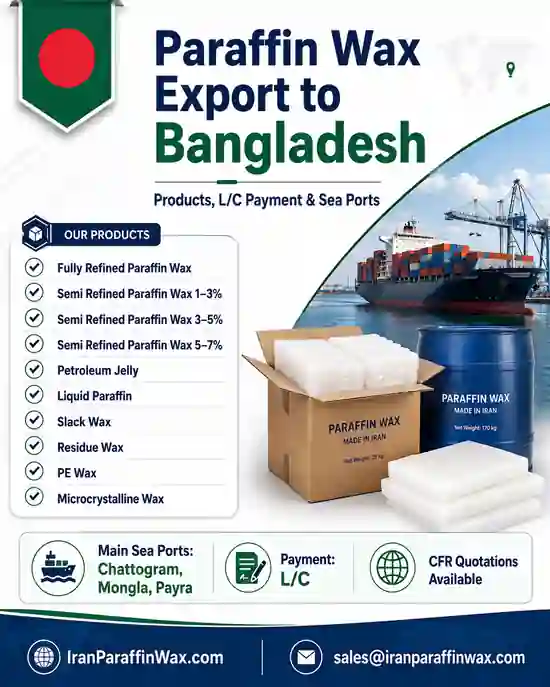
Paraffin Wax Export to Bangladesh: Products, L/C Payment and Sea Ports Bangladesh is an important industrial market for paraffin wax, petroleum jelly, liquid paraffin, slack wax and other petroleum-based products. Growing candle, packaging, textile, plastic, cosmetic, pharmaceutical and manufacturing industries create regular demand for reliable raw material suppliers. IranParaffinWax.com, a specialized website of ATDM Co., […]
Choosing the right candle wax can significantly impact the quality, appearance, and performance of the final product. When comparing Paraffin Wax vs Palm Wax, the differences go far beyond price alone. Each wax has its own strengths, making it suitable for different candle styles, manufacturing processes, and customer preferences. While both waxes are widely used […]
Why PE Wax for PVC Processing Matters in Modern Manufacturing Manufacturers continuously look for better ways to improve PVC processing efficiency, reduce machine wear, and achieve smoother product surfaces. PE wax for PVC processing plays a critical role in achieving these goals because it supports lubrication, enhances thermal stability, and improves the overall flow behavior […]
01
Dec
Dec
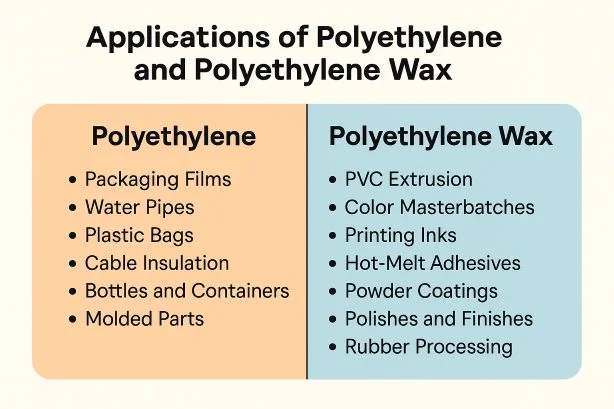
Iran PE wax Introduction to Polyethylene and Polyethylene Wax When exploring Polyethylene and Polyethylene wax, it quickly becomes clear that both materials play essential roles in modern manufacturing. Although they share the same polymer family, their behaviors differ greatly, and these differences matter significantly in real-world applications. Because industries depend on efficiency, durability, and performance, […]
01
Dec
Dec
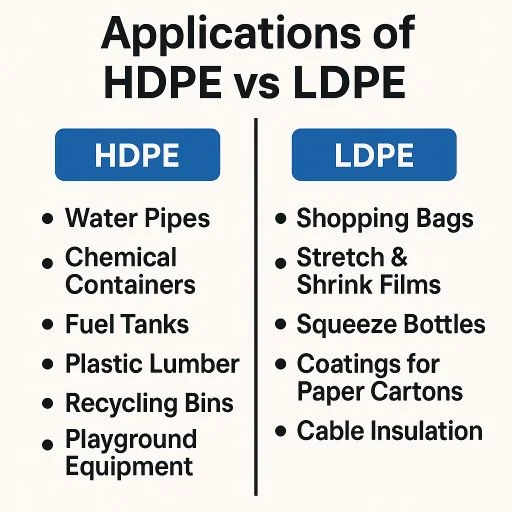
Industrial Grade Cosmetic Grade PRICE Understanding HDPE versus LDPE When comparing HDPE versus LDPE, it’s important to understand that, although both materials come from the same ethylene monomer, their behavior differs greatly. Because of their unique molecular structures, each material performs differently in strength, flexibility, and durability. Consequently, industries choose them for different reasons. What […]
More about Indian Polyethylene Wax? Polyethylene wax (PE wax) is a synthetic, smooth, and white wax made from polyethylene — one of the most common plastics in the world.In India, the demand for polyethylene wax has grown quickly because of the country’s expanding petrochemical and plastic industries. The wax is valued for its glossy texture, […]
The Versatile World of LDPE 2420 Among the many types of polyethylene, LDPE 2420 stands out for its perfect balance between flexibility, clarity, and strength. This grade belongs to the low-density polyethylene family, which is known for its soft texture and excellent film-forming ability. Although light and flexible, LDPE 2420 also provides durability and toughness […]
wax is a type of synthetic wax derived from HDPE, which is a widely used thermoplastic polymer.
- 1
- 2