

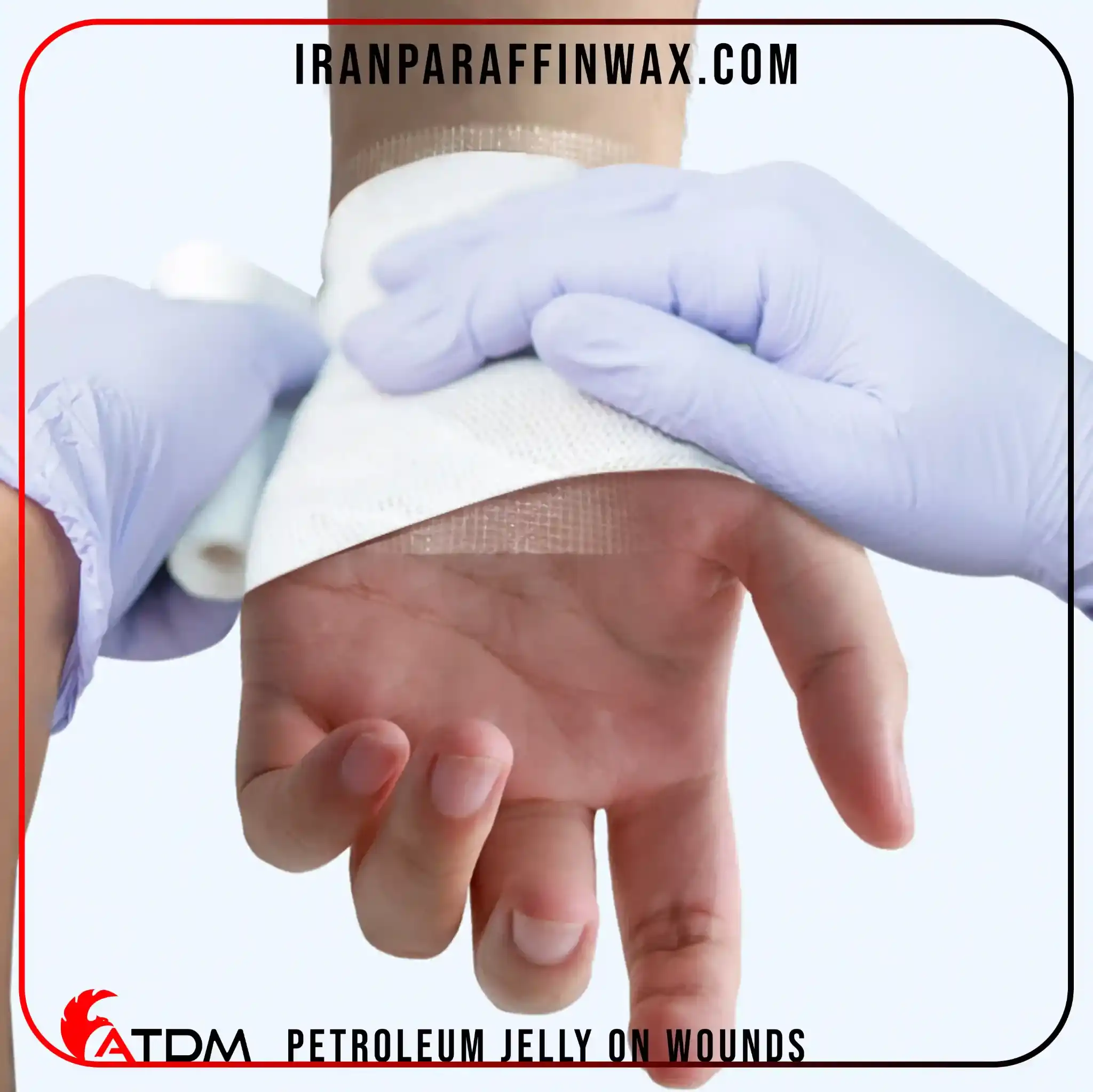
Using petroleum jelly on wound care remains one of the most common home treatments worldwide. People ask simple but important questions: Can I apply petroleum jelly on my wound? Can I put petroleum jelly on a cut? Does it actually help healing or just protect the skin?
This article explains when petroleum jelly helps, when it does not, and how to use it correctly based on real-world skin care and medical practice.
ATDM supplies high-purity petroleum jelly grades suitable for cosmetic, pharmaceutical, and medical applications, so this guide focuses on proper, safe, and effective use.
What Is Petroleum Jelly and Why It Matters for Wound Care
Petroleum jelly is a semi-solid blend of hydrocarbons refined from petroleum. Medical and cosmetic grades go through deep purification to remove impurities, odors, and reactive compounds.
When people apply petroleum jelly on wounds, they do not use it as a medicine. Instead, they use it as a skin barrier. Petroleum jelly does not kill bacteria and does not speed up healing by itself. It works by locking moisture into the skin and preventing external contamination.
That single function—moisture control—plays a major role in wound healing.
Table of Contents
ToggleCan I Apply Petroleum Jelly on My Wound?
Yes, you can apply petroleum jelly on your wound if the wound is clean, minor, and not infected.
Petroleum jelly works best for:
-
Small cuts
-
Minor scratches
-
Shallow wounds
-
Healing scabs
-
Post-procedure skin (after stitches are removed)
Before applying petroleum jelly on wounds, you must clean the area properly.
Correct Preparation Steps
-
Wash your hands
-
Clean the wound with clean water or saline
-
Gently remove dirt or debris
-
Pat dry with a clean cloth
After cleaning, apply a thin layer of petroleum jelly.
Can I Put Petroleum Jelly on a Cut?
You can put petroleum jelly on a cut after bleeding stops and cleaning finishes.
Many people believe cuts must “dry out.” This belief causes more scarring and slower healing. Modern wound care supports moist healing environments, and petroleum jelly helps create exactly that.
When you put petroleum jelly on a cut:
-
Skin cells move faster across the wound
-
Scab formation reduces
-
The wound stays flexible instead of cracking
Covering the cut with a clean bandage after application improves results even more.
Applying Petroleum Jelly on Wounds: What It Actually Does
Applying petroleum jelly on wounds does four important things:
1. Prevents Moisture Loss
Dry wounds heal slower. Petroleum jelly traps moisture inside the skin, allowing cells to regenerate efficiently.
2. Reduces Scab Formation
Hard scabs increase scar formation. Petroleum jelly keeps wounds soft and flexible.
3. Creates a Protective Barrier
Petroleum jelly blocks dirt, dust, and external irritants from entering the wound.
4. Improves Comfort
Moist wounds itch less, crack less, and feel less tight during healing.
What Petroleum Jelly Does NOT Do
It is important to understand limitations.
Petroleum jelly:
-
Does not disinfect wounds
-
Does not treat infections
-
Does not replace antibiotics
-
Does not heal deep or severe wounds
If a wound shows signs of infection—redness, swelling, warmth, pus, or pain—you must stop home treatment and seek medical advice.
Can I Apply Petroleum Jelly on an Open Wound?
You can apply petroleum jelly on small open wounds after cleaning. You should never apply it to deep wounds, puncture wounds, or animal bites without medical guidance.
Do not use petroleum jelly on:
-
Deep cuts
-
Burns beyond superficial level
-
Infected wounds
-
Surgical wounds before medical clearance
In these cases, petroleum jelly can trap bacteria instead of helping.
Alternative to Vaseline for Wounds
Many people search for an alternative to Vaseline for wounds. The effectiveness depends on the wound type.
Common Alternatives
-
Antibiotic ointments (for infection-risk wounds)
-
Silicone gel (for scar management)
-
Zinc oxide creams (for irritation and diaper rash)
-
Medical honey (for controlled clinical use)
Despite alternatives, petroleum jelly remains one of the safest and most skin-neutral options when infection risk stays low.
High-purity petroleum jelly supplied by ATDM meets pharmaceutical and cosmetic standards, making it suitable for controlled wound protection.
Petroleum Jelly vs Antibiotic Ointments
Many people assume antibiotic ointments heal wounds better. That is not always true.
Antibiotic ointments:
-
Help prevent infection
-
May cause allergic reactions
-
Should not be used long-term
Petroleum jelly:
-
Has no antibiotic resistance risk
-
Causes fewer skin reactions
-
Works well for clean wounds
For clean cuts and minor wounds, petroleum jelly often performs just as well without unnecessary antibiotics.
How Often Should You Apply Petroleum Jelly on Wounds?
You should apply petroleum jelly 1–3 times per day, depending on exposure.
Reapply if:
-
The wound looks dry
-
The bandage sticks to skin
-
The area feels tight or itchy
Always clean the area gently before reapplying.
Does Petroleum Jelly Cause Infection?
Petroleum jelly does not cause infection by itself. Problems occur only when people apply it to dirty or infected wounds.
Using clean hands, clean tools, and sterile product prevents issues.
Medical-grade petroleum jelly from controlled suppliers like ATDM minimizes contamination risks during manufacturing and packaging.
Who Should Use Petroleum Jelly on Wounds?
Petroleum jelly works well for:
-
Families and home first-aid kits
-
Elderly skin with slow healing
-
Children with minor cuts
-
Cosmetic post-procedure care
-
Dermatology aftercare
Doctors and nurses frequently recommend petroleum jelly for simple wound maintenance, especially where dryness causes delayed healing.
Final Advice from Real Practice
Petroleum jelly on wound care works best when people use it correctly and understand its role. It protects, moisturizes, and supports natural healing—but it does not replace medical treatment.
Use petroleum jelly when:
-
The wound is clean
-
The injury is minor
-
Moist healing improves comfort
Avoid it when:
-
Infection appears
-
Wounds run deep
-
Medical care is required
ATDM supplies refined petroleum jelly grades suitable for cosmetic, pharmaceutical, and medical formulations, supporting safe and reliable wound care products worldwide.
