
Why Iran Is a Major Supplier for Importers
First of all, Iran plays an important role in the global wax market. This is because the country operates large oil refineries that produce paraffin wax and slack wax in high volumes. As a result, producers can supply the market steadily throughout the year. Moreover, this stable production helps importers plan purchases with more confidence. Therefore, buyers sourcing from Iran often face fewer supply gaps compared to other markets.
In addition, Iran’s direct access to raw materials gives producers better control over output. Consequently, manufacturers can respond faster to changes in demand. Because of this flexibility, importers benefit from more reliable delivery schedules.
Table of Contents
ToggleCost Advantages and Production importing from Iran Capacity
In addition to supply strength, cost efficiency is another key reason importers choose Iran. Since feedstock comes directly from local refineries, production costs remain relatively low. As a result, suppliers can offer competitive prices. Moreover, lower production costs allow buyers to manage budgets more effectively. Therefore, many traders continue to consider Iranian products when looking to reduce overall sourcing expenses.
At the same time, large-scale production capacity supports bulk orders. Consequently, Iran remains attractive for buyers who need consistent volumes over longer periods.
Legal and Regulatory Considerations for Importing from Iran
Before starting any transaction, importers should clearly understand the regulatory rules of their destination country. In most cases, customs authorities require full compliance with import procedures and product standards. Therefore, early preparation becomes essential. Otherwise, shipments may face delays or extra paperwork for importing from Iran.
Furthermore, each market applies its own technical and safety requirements. For this reason, importers should always review regulations before finalizing contracts.
Country-Specific Import Requirements
At the same time, import rules differ from country to country. For example, some markets require additional permits or product registration for petroleum-based goods. Meanwhile, other countries focus more on documentation and labeling. Therefore, checking local rules in advance helps avoid problems at the destination port. As a result, importers save both time and cost.
Process of Importing Paraffin Wax or Slack Wax
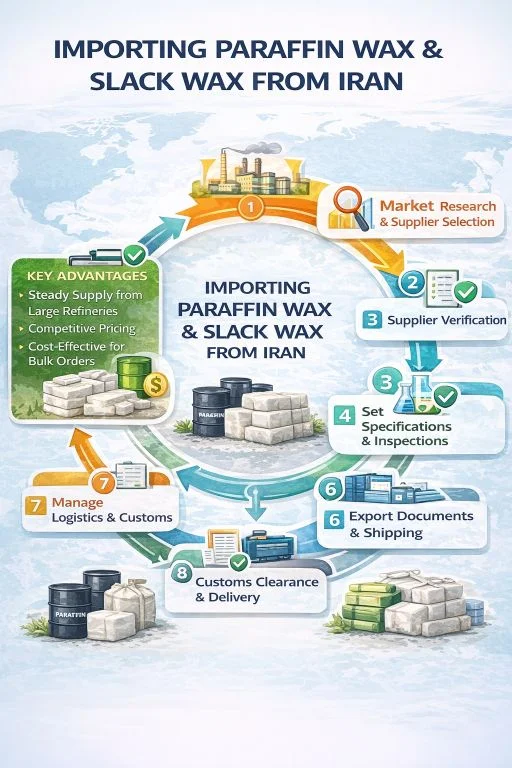
To succeed, importers should follow a clear and organized process. First, they need to study market demand and pricing for importing from Iran. Then, they should move step by step through supplier selection, quality control, and logistics planning.
Supplier Selection and Verification
Initially, importers should choose suppliers with proven experience. Next, they should verify company registration and export capability. By doing so, buyers reduce commercial risk. As a result, cooperation becomes smoother and more predictable.
Product Specifications and Quality Control for importing from Iran
After supplier selection, both parties must agree on clear product specifications. For instance, melting point, oil content, color, and packaging should be defined early. Moreover, using third-party inspections helps confirm product quality. Consequently, disputes become less likely.
Contract Terms and Trade Conditions of importing from Iran
Once specifications are agreed, contract preparation follows. Therefore, delivery terms, ports, quantities, and responsibilities should be clearly stated. In this way, misunderstandings during shipment are reduced.
Payment and Financial Arrangements
Next, payment planning requires careful attention. Because clear payment terms protect both sides, they should be agreed in advance. As a result, transactions move forward with fewer issues.
Export Documentation and Shipping
Meanwhile, exporters must prepare accurate documents such as invoices, packing lists, and certificates for importing from Iran. At the same time, shipping and insurance arrangements should be coordinated. Therefore, cargo moves more smoothly from origin to destination.
Customs Clearance and Final Delivery
Finally, customs clearance takes place at the destination. If documents are correct, goods clear faster. As a result, delivery to the warehouse happens without unnecessary delay.
Required Documents for Importing Paraffin and Slack Wax from Iran
In general, successful imports depend on proper paperwork. Therefore, importers should prepare commercial invoices, packing lists, certificates of origin, COA, SDS, and bills of lading. Otherwise, customs authorities may hold the shipment.
Common Challenges in Importing from Iran
Even with planning, challenges can still arise. For example, payment coordination may take time. In addition, shipping options may be limited. Moreover, quality consistency can vary without inspection. Finally, changes in procedures or market conditions may affect delivery timelines.
Risk Management Strategies for Importers
To reduce these risks, importers should work with experienced partners. Furthermore, third-party inspections help protect quality. At the same time, using more than one supplier reduces dependency. As a result, starting with trial shipments often proves to be a smart approach.
How We Support Customers in Importing Iranian Products
Although challenges exist, structured solutions make the process manageable. First, we focus on clarity and coordination. As a result, customers feel more confident throughout the transaction and importing from Iran.
Supplier Review and Compliance Checks
Initially, we review supplier documents and capabilities. Therefore, sourcing becomes more reliable.
Clear and Structured Payment Support
Next, we help arrange transparent payment structures. In this way, financial risks are reduced.
Quality Assurance and Inspection Management
Meanwhile, we define product standards and coordinate inspections. As a result, customers receive consistent quality.
Logistics and Shipping Optimization
In addition, we plan suitable shipping routes and arrange insurance. Consequently, delivery reliability improves.
Documentation and Customs Support
Finally, we manage documentation and support customs clearance. As a result, delays and extra costs are minimized.
Conclusion of importing from Iran
In summary, understanding the process of importing paraffin wax and slack wax from Iran is essential for success. With proper planning, clear agreements, effective quality control, and organized logistics, challenges become manageable. Therefore, businesses that follow a structured approach can import confidently, legally, and profitably.
FAQs about importing from Iran
How do you reduce the risks of importing from Iran?
By using careful supplier selection, clear payments, inspections, and organized logistics.
How do you ensure product quality?
By setting clear specifications and using third-party inspections.
Is importing from Iran cost-effective?
Yes, when managed properly, total landed costs remain competitive.
Do you handle documentation and customs support?
Yes, support is provided from contract stage to final clearance.
Is this suitable for first-time importers?
Yes, the structured process works for both new and experienced buyers.
Do I need a chemical import license?
Many countries require permits for petroleum-based products like paraffin wax and slack wax etc, so local rules should be checked.
