

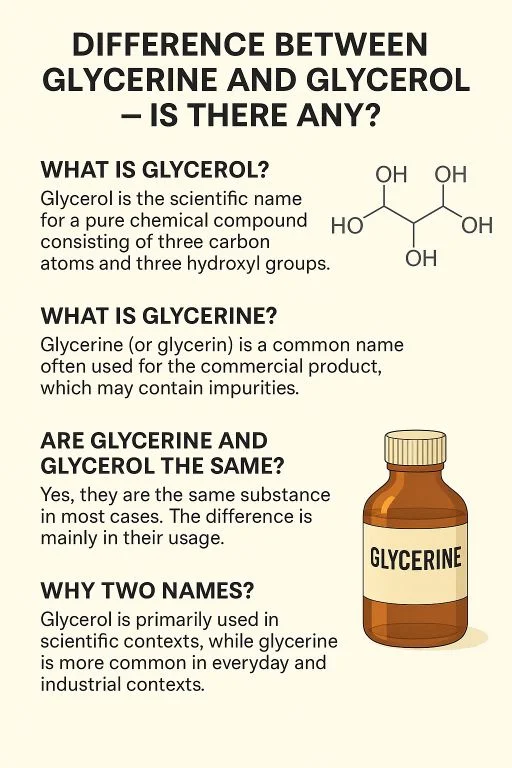
Difference Between Glycerine and Glycerol – Is There Any?
Have you ever seen the words glycerine and glycerol on a product label and wondered if they mean the same thing? You’re not alone. These terms often confuse people, but they’re closely related. In most cases, they refer to the same substance, but the context matters.
Let’s explore the difference.
Table of Contents
ToggleInformation of Glycerol
Glycerol is the scientific name for a simple sugar alcohol. It contains three carbon atoms and three hydroxyl groups (–OH), which give it its thick, sweet, and water-loving (hydrophilic) nature.
Because of its unique properties, glycerol plays many roles. You can find it in for Difference Glycerine and Glycerol:
-
Medicines, where it helps keep products moist or dissolves ingredients.
-
Skincare items, because it holds water and hydrates skin.
-
Food products, where it acts as a sweetener or preservative.
-
Industrial settings, where it works as a lubricant or antifreeze.
Moreover, glycerol forms the backbone of fats and oils in both plants and animals.
understanding Glycerin for Difference of Glycerine and Glycerol
Glycerine (also spelled glycerin) is the common or commercial name for glycerol. While both words refer to the same chemical substance, the term “glycerine” usually appears on product packaging or in trade settings.
Here’s the key difference:
-
Glycerol refers to the pure chemical compound.
-
Glycerine often refers to a less pure version, especially when used in cosmetics, food, or industrial products.
For example, when manufacturers produce biodiesel, they also create glycerine as a by-product. This version might contain impurities and usually goes through purification before use in foods or medicines.
Are Glycerine and Glycerol the Same?
In simple terms, yes—they are the same substance in most cases. However, their names change depending on context:
-
Scientists and chemists use glycerol.
-
Companies, marketers, and everyday consumers use glycerine.
If you’re reading a product label, and it says glycerin, it’s almost always referring to glycerol.
Why Do Two Names Exist?
The word “glycerol” comes from the Greek word glykys, which means sweet. It reflects the sweet taste of this compound. On the other hand, “glycerine” is an older term that gained popularity in commerce and product labeling.
Over time, both names stuck—but each found its place in different fields.
Final Thoughts: Is There a Real Difference Glycerine and Glycerol?
Let’s wrap it up clearly:
-
Chemically? No difference — both refer to the same molecule.
-
Practically? Slight difference — “glycerol” means the pure form; “glycerine” may be less pure and used in everyday products.
So, next time you see either word, you’ll know they describe the same sweet, versatile liquid—just through different lenses.
