
Slack Wax and Paraffin Wax represent two of the most widely used industrial waxes across industries such as cosmetics, candle manufacturing, food packaging, rubber processing, and pharmaceuticals. Although both waxes come from petroleum, they differ greatly in composition, refining methods, and end-use applications. If you’re a buyer, sourcing manager, or product developer looking to choose the right wax for your production needs, understanding these differences can save you time, cost, and potential product issues. In this article, we’ll walk you through the essential differences between Slack Wax and Paraffin Wax so you can make the most informed purchasing decision.
Slack Wax: A Cost-Effective Industrial Option
Manufacturers produce Slack Wax during the refining of lubricating oils. This semi-refined material contains a relatively high percentage of oil—typically between 5% and 30%—as well as impurities such as resins and aromatics. Because of this unrefined state, Slack Wax usually serves as a feedstock for creating more refined waxes or as a functional material in heavy-duty industrial applications. Industries that prioritize cost-efficiency and performance over appearance regularly use Slack Wax. For instance, it performs well in rubber blending, waterproofing, particleboard manufacturing, corrosion prevention, and match production. Its greasy texture and high oil content also provide excellent lubrication and flexibility, making it ideal where technical function matters more than visual quality.
Paraffin Wax: A Refined Solution for Consumer Products
To create Paraffin Wax, producers take Slack Wax through a solvent dewaxing process. This removes most of the oil and impurities, resulting in a highly refined product with less than 1% oil content. What comes out is a clean, smooth wax that appears white or translucent and carries a neutral scent. Thanks to its consistent texture and high purity, Paraffin Wax suits industries where product safety, hygiene, and presentation matter. You’ll find it in candles, skincare products, pharmaceuticals, food-grade coatings, and crayons. Its stability and refined composition also allow manufacturers to meet stringent quality standards in both food and cosmetic production.
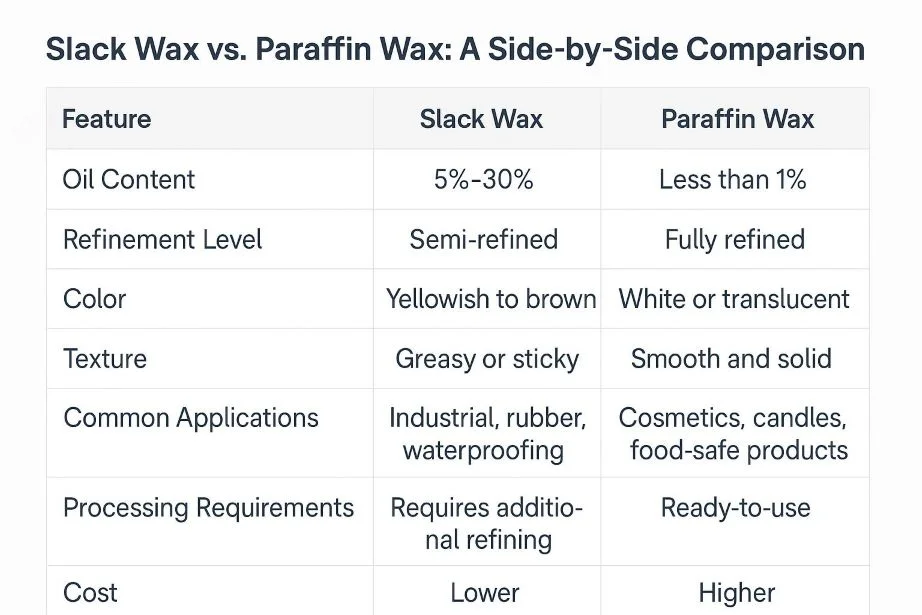
Slack Wax vs. Paraffin Wax: A Side-by-Side Comparison
| Feature | Slack Wax | Paraffin Wax |
|---|---|---|
| Oil Content | 5%–30% | Less than 1% |
| Refinement Level | Semi-refined | Fully refined |
| Color | Yellowish to brown | White or translucent |
| Texture | Greasy or sticky | Smooth and solid |
| Common Applications | Industrial, rubber, waterproofing | Cosmetics, candles, food-safe products |
| Processing Requirements | Requires additional refining | Ready-to-use |
| Cost | Lower | Higher |
Which Wax Should You Choose?
If your operation involves industrial manufacturing where purity and appearance aren’t priorities—such as rubber compounding, waterproof coatings, or anti-corrosion treatments—then Slack Wax is a practical and cost-effective option. It allows you to keep costs down without compromising on essential performance. On the other hand, if you produce consumer-facing goods that must meet strict safety and aesthetic standards, then Paraffin Wax is the clear choice. Whether you’re making scented candles, skincare items, or coated food packaging, you’ll benefit from its smooth texture, high purity, and market-ready finish.
Final Thoughts
Both Slack Wax and Paraffin Wax serve vital roles in modern manufacturing, but your selection should always align with your specific goals, budget, and quality standards. Choose Slack Wax for high-volume industrial needs where function and affordability lead. Opt for Paraffin Wax when purity, safety, and presentation are non-negotiable. By carefully evaluating factors like oil content, refining requirements, and end-use applications, you can make a smarter investment and optimize your supply chain. Whether you manage sourcing for a large manufacturer or advise clients as a distributor, mastering the distinctions between these two waxes gives you a solid edge in today’s competitive market.
Table of Contents
Toggle